Menopause Isn’t Just Hot Flashes: The Changes No One Warned You About
We all know about the hot flashes.
The night sweats.
The weight gain.
The changes in your periods.
Those are the things we hear about when people talk about menopause.
But what about everything else?
The stiff joints when you get out of bed.
The workouts that suddenly leave you exhausted instead of energized.
The feeling that your body isn't responding to exercise the way it used to.
The extra time it takes to recover.
The changes in your energy, sleep, and body composition.
And maybe the most frustrating part?
You're doing what you've always done, but it doesn't seem to be working anymore.
I've been there.
And one of the biggest lessons menopause taught me is this:
You don't necessarily need to work harder. You may need to work smarter.
Menopause Doesn't Mean You Have to Accept Feeling Worse
There are a lot of things women hear when they start experiencing changes during menopause.
"That's just menopause."
"That's what happens when you get older."
"You just have to accept it."
And yes, menopause comes with real changes.
Hormone levels shift. Your body changes. The way you respond to exercise, nutrition, stress, and recovery can change too.
But that doesn't mean you have to sit back and accept feeling worse and worse.
Menopause isn't about accepting the inevitable.
It's about understanding what's changing and learning how to work with your body instead of constantly fighting against it.
That may mean changing the way you exercise.
It may mean paying more attention to recovery.
It may mean becoming more intentional about nutrition.
It may mean prioritizing sleep, hydration, and stress management.
And sometimes, it may mean talking with your healthcare provider when something doesn't feel right.
The point is that you have options.
Your Body Isn't Broken
This was a big realization for me.
For years, I knew how to exercise. I knew how to eat. I knew how to push myself.
But when I went through menopause, some of the things that had worked for me for years didn't work the same way anymore.
My body felt different.
My joints felt different.
My recovery felt different.
And instead of recognizing that my body was changing, it was easy to think I was doing something wrong.
Maybe I needed to work out more.
Maybe I needed to eat less.
Maybe I just needed to push harder.
But eventually I realized something:
My body wasn't broken. It was changing.
And if my body was changing, my approach needed to change too.
That shift made a huge difference in how I thought about my health.
When Working Harder Isn't the Answer
We're conditioned to think that if something isn't working, we just need to do more.
More workouts.
More cardio.
Less food.
More restriction.
Push harder.
But your body doesn't always need more.
Sometimes it needs something different.
If you're constantly exhausted, another intense workout may not be what you need.
If your joints are already irritated, pushing through more pain isn't necessarily going to help.
If you're trying to maintain muscle as you age, spending hours doing cardio while barely eating may not be the best approach.
And if you're not recovering between workouts, adding even more exercise may leave you feeling worse.
This is where working smarter comes in.
Instead of asking:
"How much more can I do?"
Start asking:
"What does my body need right now?"
That's a very different question.
So What Does Working Smarter Look Like?
It doesn't mean giving up.
It means being more intentional about how you take care of yourself.
Build and Maintain Strength
Strength training becomes an important part of staying strong and capable as you age.
But you don't need to destroy yourself in the gym.
Focus on consistent, purposeful strength training that challenges your muscles while giving your body enough time to recover.
The goal isn't to finish every workout completely exhausted.
The goal is to become stronger and more capable.
Keep Moving
Movement doesn't have to be complicated.
Walking, biking, stretching, gardening, hiking, swimming, and simply moving throughout your day all count.
You don't have to exercise harder every day.
You need to keep your body moving consistently.
And if you're dealing with joint pain or stiffness, finding movement that supports your body instead of beating it up can make a big difference.
Fuel Your Body
This is not the time to punish your body with another restrictive diet.
Your body needs nourishment.
Think about quality protein, colorful fruits and vegetables, fiber-rich foods, healthy fats, and plenty of water.
Instead of constantly asking:
"What do I need to cut out?"
Try asking:
"What can I add to better support my body?"
Food isn't the enemy.
It's one of the tools you have to support your health.
Make Recovery Part of the Plan
Recovery isn't something you do only when you're exhausted.
It's part of the process.
Sleep matters.
Hydration matters.
Stress management matters.
Rest matters.
Your body needs time to repair and adapt.
Doing more isn't always better.
Sometimes the smarter choice is knowing when to slow down.
Pay Attention to Your Body
This may be one of the most important things you can do during menopause.
Notice patterns.
Pay attention to how you feel.
If something is new, persistent, severe, or concerning, don't automatically assume it's "just menopause."
Talk with your healthcare provider and make sure you're getting the appropriate evaluation and care.
You know your body better than anyone.
Don't ignore what it's telling you.
You Don't Have to Go Backward
One of the biggest mindset shifts I've had during this stage of life is realizing that I don't want to go backward.
I'm not trying to be 25 again.
I'm not trying to have the body I had at 30.
I want to feel good in the body I have now.
At 51, I want to be strong.
I want energy.
I want to move without constantly thinking about my joints.
I want to travel.
I want to ride my bike.
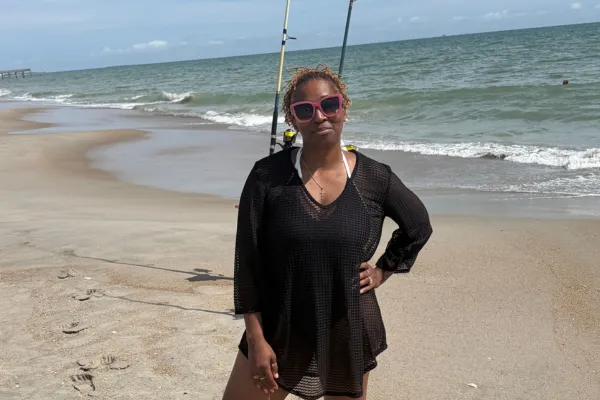
I want to fish.
I want to hike.
I want to explore.
I want to try new things.
And I want the physical ability to actually enjoy those things.
That's why I'm not interested in accepting the idea that getting older automatically means doing less and feeling worse.
I'd rather figure out what my body needs now and adjust accordingly.
That's working smarter, not harder.
Menopause Doesn't Have to Define What's Possible for You
Maybe you've noticed changes in your body and thought:
"Well, I guess this is just how things are now."
Maybe you've stopped doing certain things because your joints hurt.
Maybe you're exhausted all the time.
Maybe your old workouts aren't working anymore.
Maybe you've tried diet after diet because you don't recognize your body.
Or maybe you're simply frustrated because no one told you that menopause could feel like such a significant shift.
I want you to know that you're not alone.
And you don't have to figure everything out overnight.
Start by getting curious about your body.
Pay attention to what makes you feel better.
Pay attention to what leaves you exhausted.
Find movement that supports you.
Nourish your body.
Prioritize recovery.
And stop assuming that the answer is always to push harder.
Your body may not need more from you. It may need you to listen.
Your Next Chapter Is Still Yours
Menopause is a transition.
It isn't the end of your health.
It isn't the end of your strength.
It isn't the end of your energy.
And it certainly isn't the end of the things you want to do.
I'm 51, and I don't feel like my life is getting smaller.
If anything, I feel like I'm just getting started.
I'm learning more about myself.
I'm doing more of what I actually want to do.
I'm taking better care of my body.
And I have the energy to enjoy the life I'm creating.
That's what I want for you, too.
You don't have to accept that feeling tired, achy, or disconnected from your body is simply your new normal.
You can learn what's changing.
You can adapt.
You can make different choices.
You can work smarter.
And you can keep building a body that supports the life you want to live.
Menopause doesn't get to decide what's possible for you.
You still have a lot of living to do.
Ready to Take the First Step?
If joint pain or stiffness is getting in the way of the things you want to do, don't assume you simply have to live with it.
Take my free Joint Pain Assessment to get a better understanding of what's going on and where you can begin.
TAKE THE FREE JOINT PAIN ASSESSMENT →
You don't have to work harder.
You may just need to work smarter.
— Coach Leslie